
The Modern-Day Michelin Guide: Anthropic's Massive Programmatic SEO Opportunity
Anthropic's massive programmatic SEO opportunity: the single biggest acquisition play in internet history.
 Written byPatrick Stox
Anthropic should build a massive library of free, Claude-generated tools and calculators — an "Artifact Gallery." Making every tool freely embeddable across the web creates a viral acquisition loop: visitors who want to customize an embedded tool must sign up for Claude, potentially driving hundreds of millions of monthly organic visitors and converting them into users.
Dear readers, let me pitch you my vision. I hope a few curious minds from Anthropic are reading this.
I’m talking about building the modern-day Michelin Guide. The modern Guinness Book of World Records. The single biggest programmatic SEO play in internet history.
If you aren’t familiar with the stories, the Michelin Guide wasn’t born out of a love for fine dining; it was created by a tire company to get people driving more and buying more tires. The Guinness Book of World Records was created by a brewer to settle pub trivia arguments and keep people in bars longer and drinking more beer.
Anthropic has a similar opportunity. They could be leveraging their own tech to drive hundreds of millions of monthly organic visitors straight to their domain, converting many of them to Claude users.
This is the kind of thing that gets written about in history books. That people will still talk about 1,000 years from now.
The Play: The Ultimate Global Artifact Gallery
Think about Claude’s core user base: builders, automators, and creators. With the launch of Artifacts, Claude shifted from a standard chatbot to a collaborative workspace. You tell Claude what you want to build, and you watch it render in real-time. It makes ideation and iteration incredibly fast.
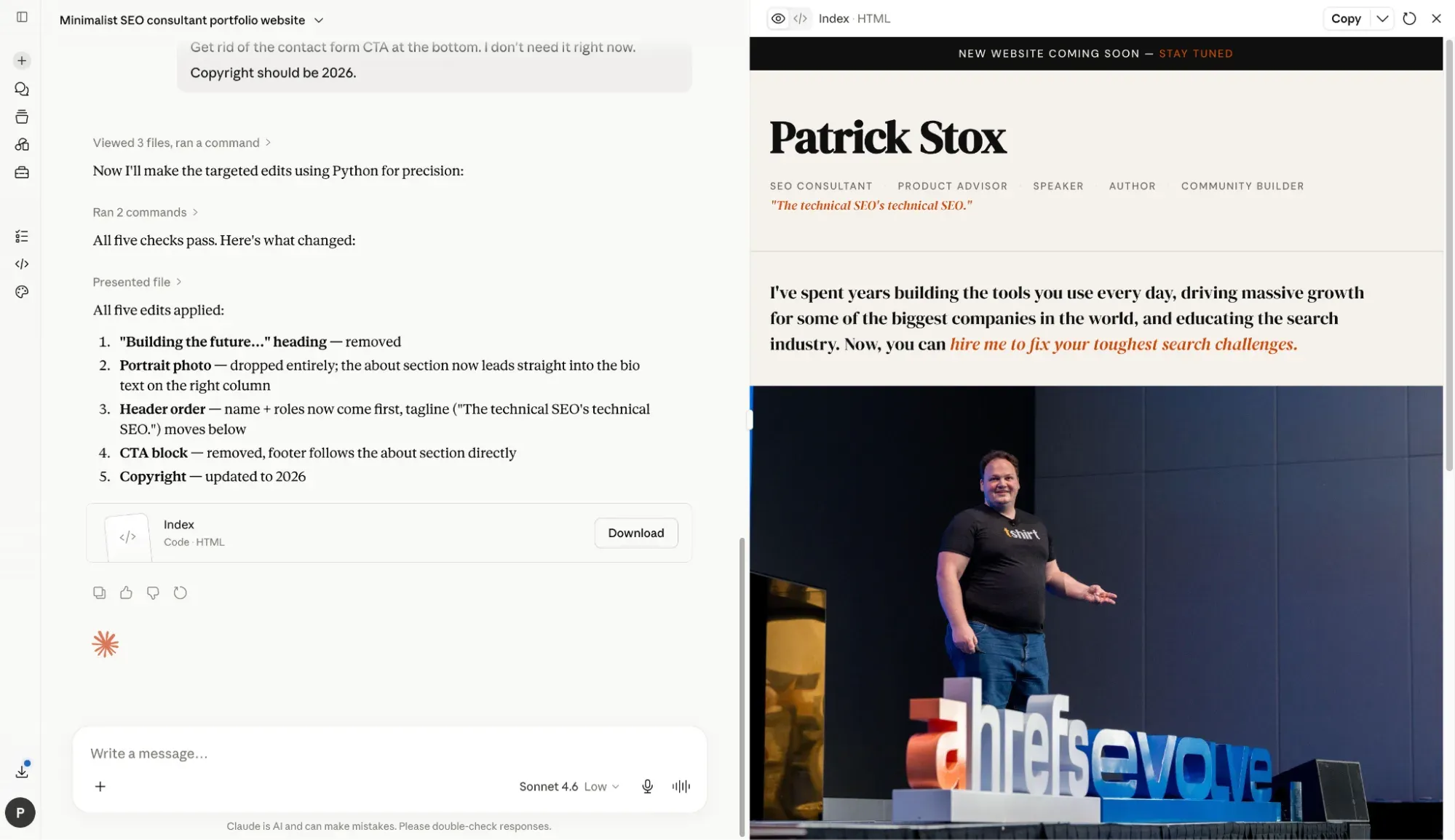
Here’s where it gets interesting: Anthropic allows users to publish and embed these artifacts into external webpages. When third-party visitors interact with an embed and want to customize it, they have to sign up for Claude to do it. It is a flawless, friction-free acquisition loop.
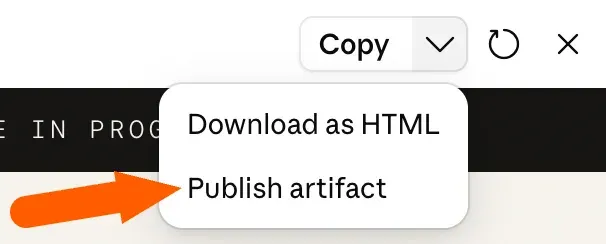
But right now, they are thinking too small.
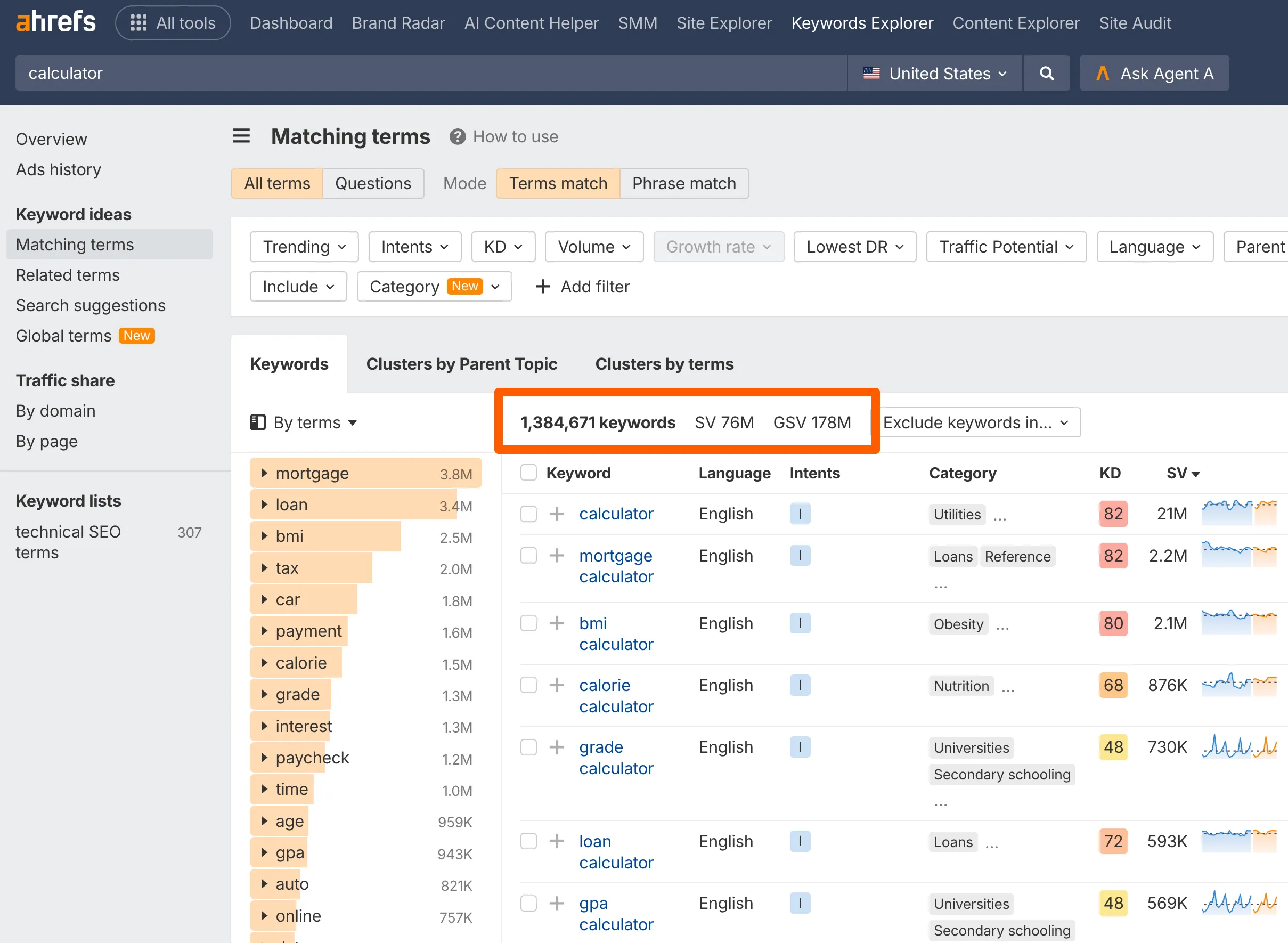
Imagine if Anthropic used keyword data from tools like Ahrefs or Google Keyword Planner to identify every high-volume calculator, tool, and interactive widget on the internet.
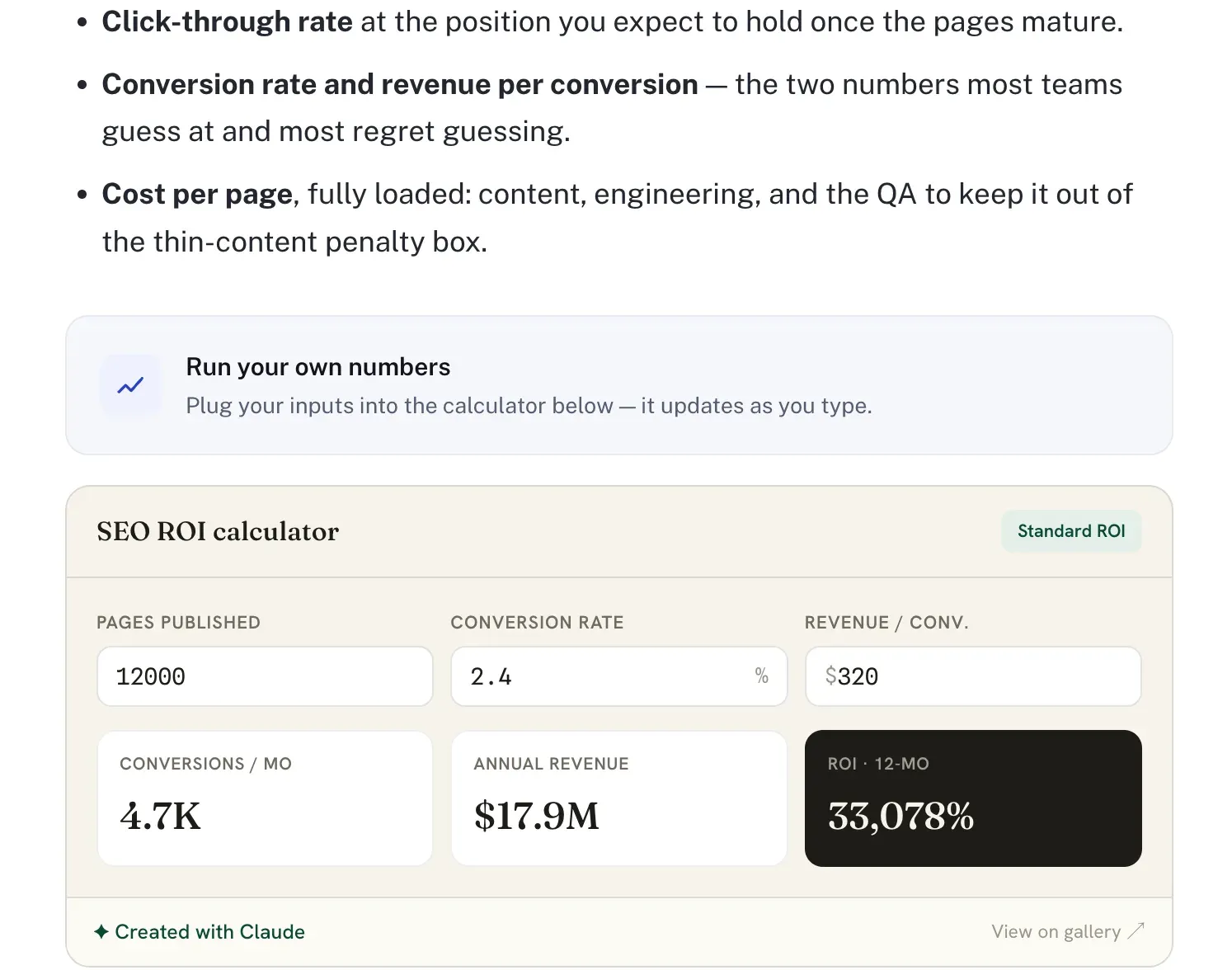
Then use Claude to programmatically build free versions of all of them. Build an artifact gallery website, something like this:
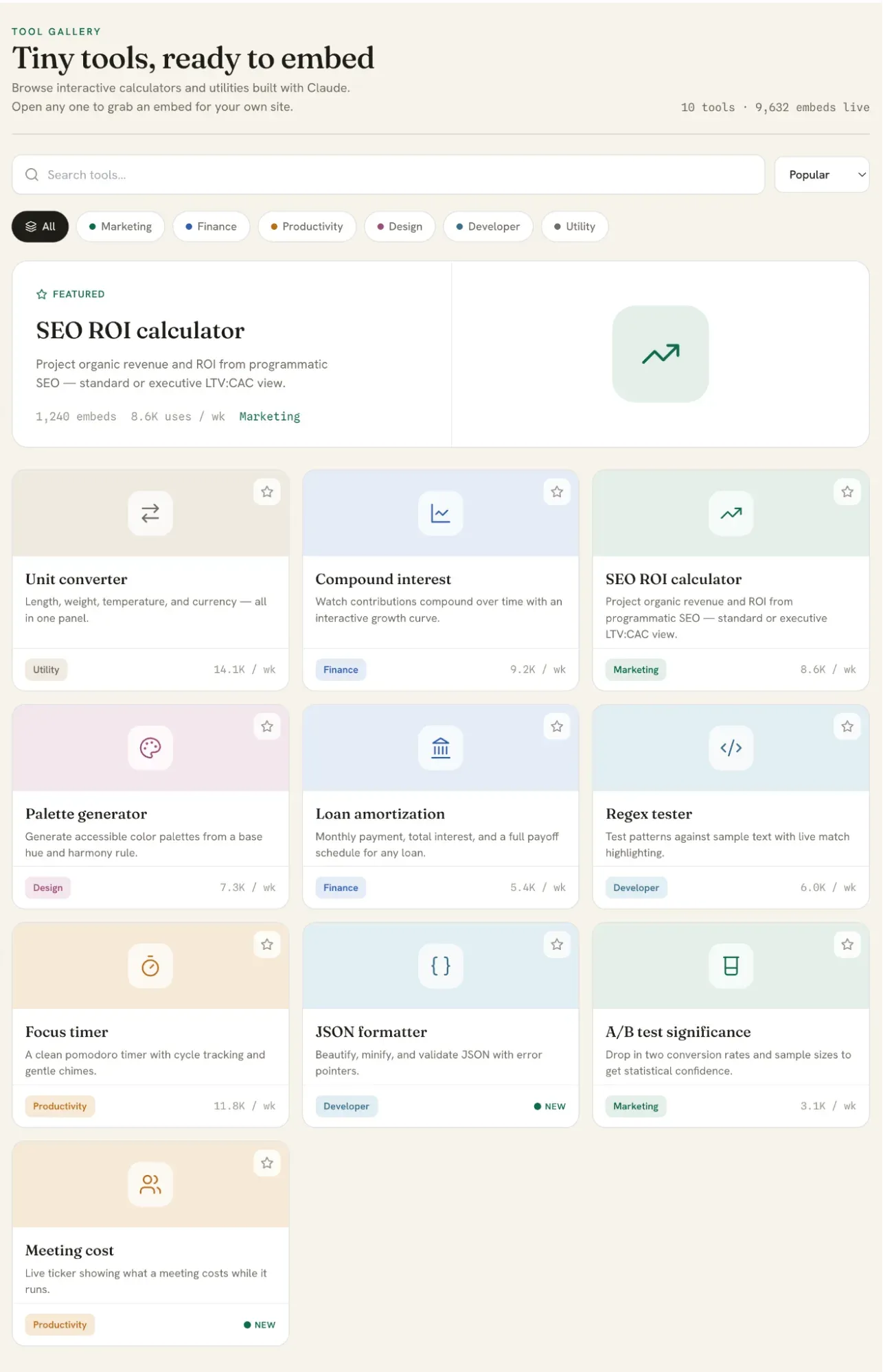
To turn this into a viral acquisition engine, they should give the internet full permission to embed these tools for free. Imagine millions of websites embedding various tools that are all built with Claude.
Note: To make this work, Anthropic would need to lift the default
frame-ancestorswhitelist restrictions on embeds, allowing public domains to display them seamlessly.
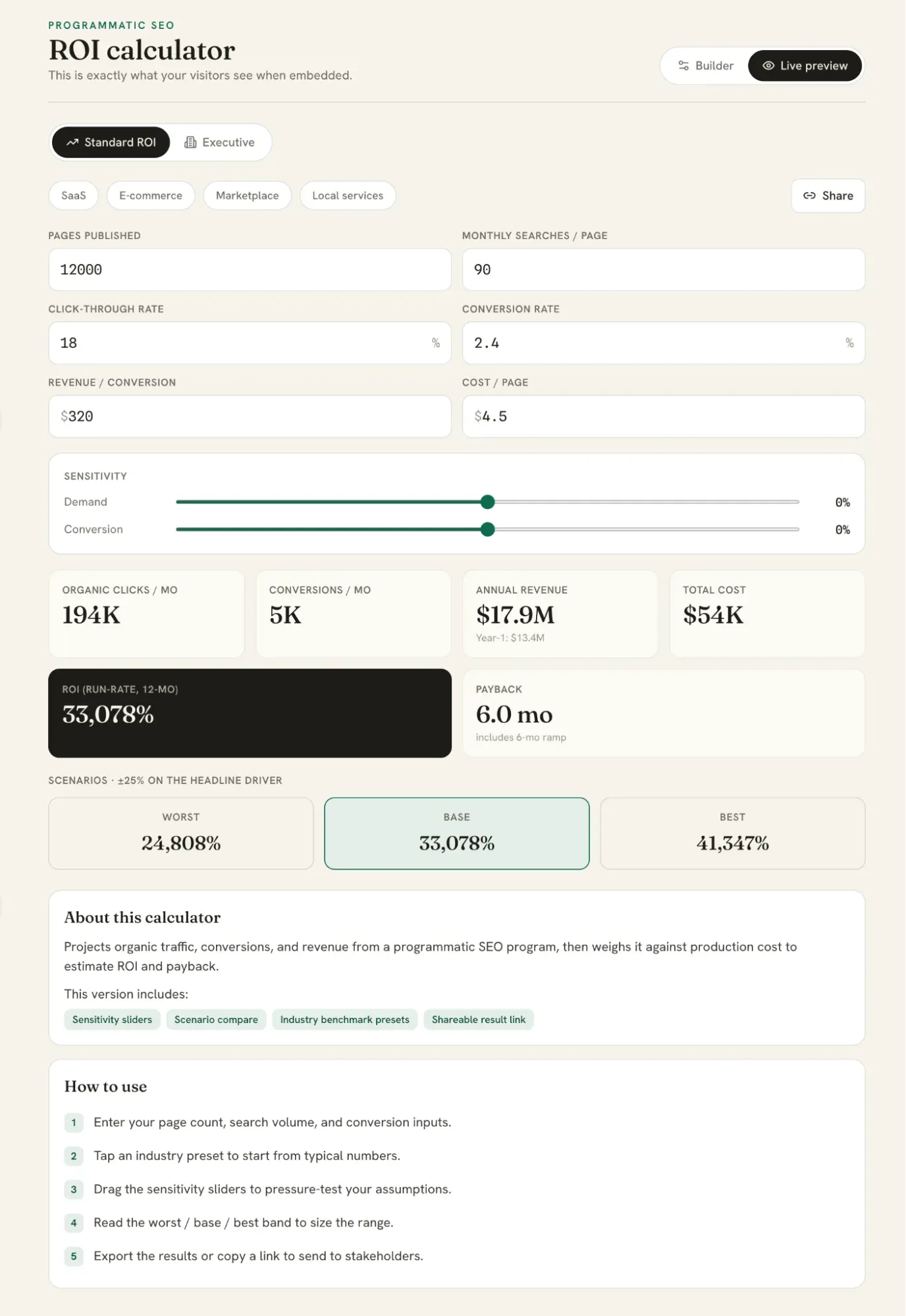
Each embed would feature a subtle “Created with Claude” nofollow link back to the main artifact in the gallery. You could even add a call to action to make your own edits or updates. To supercharge the content, Claude would programmatically generate customized “About the Tool” and “How to Use” documentation for every single variation.
Don’t Just Publish Once — Iterate And Improve
If you just did what I’ve described, it would probably do okay. You might see a few million or potentially tens of millions of monthly visitors from organic search. But we want more. We want the project that people will talk about in 1,000 years.
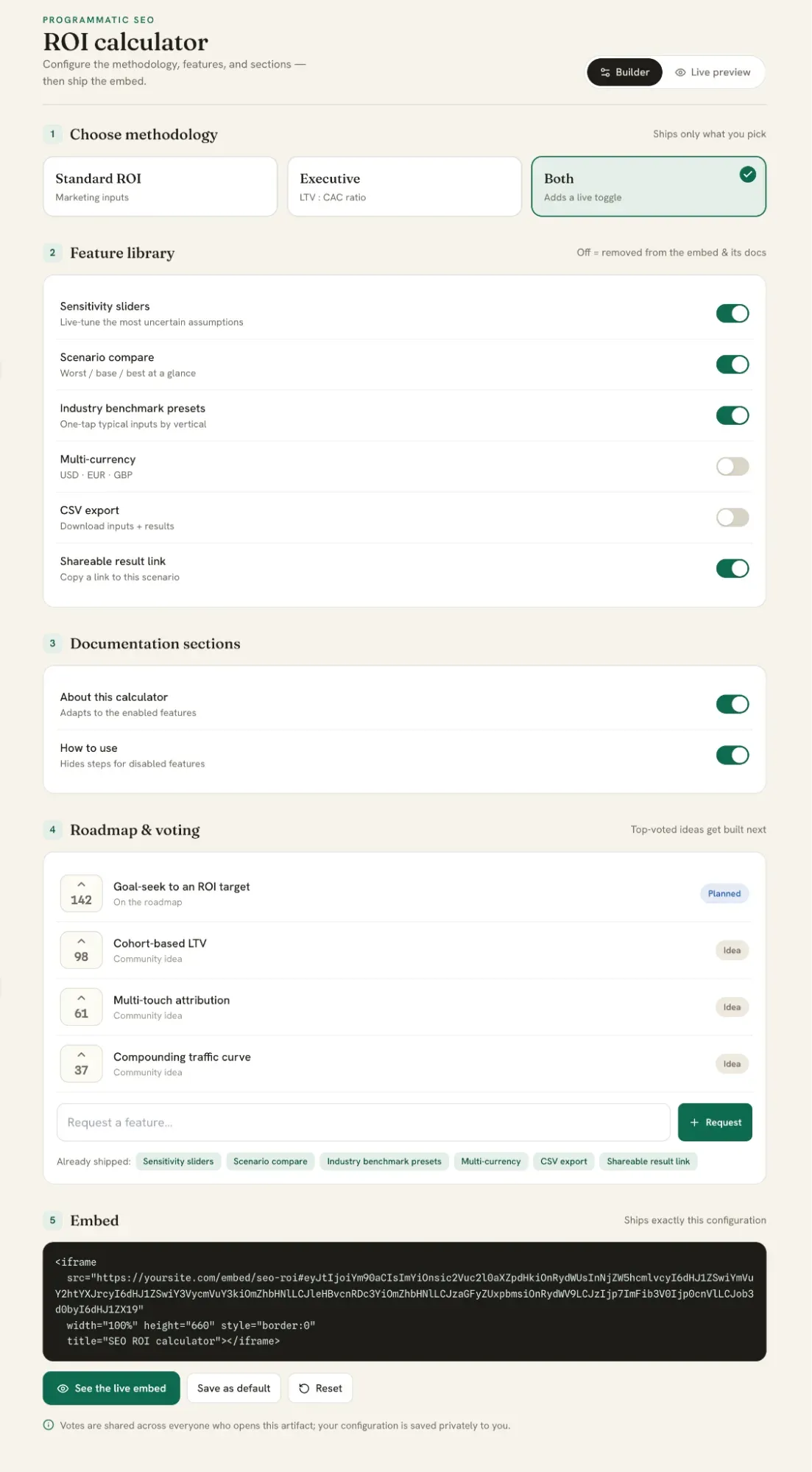
What if users could request feature additions directly on the page? A visitor could ask to add an amortization schedule to a calculator, other visitors could upvote it, and Claude could periodically deploy updates to include the most popular requests.
- Display these upgrades as a dynamic feature checklist.
- Users could select only the features they want, and the app would instantly toggle to that custom version.
- Automatically rewrite the text — like the “About the Tool” and “How to Use” sections — to match the user’s custom selections.
Making It Easy for Users to Host on Their Own Sites
To turn this into a viral acquisition engine, we need to make it incredibly simple for people to put these tools on their websites.
For casual users, a standard iframe copy-paste code works. But for power users and serious publishers who want these tools to rank natively on their own domains, we can do something much cooler: let Claude deploy it for them via a Cloudflare Worker.
How would that look?
Claude clones the visual design of the user’s existing website, pairs it with the custom calculator or tool, and packages it into a lightweight Cloudflare Worker script. The user simply copies that script into their own Cloudflare account.
By utilizing Cloudflare KV (Key-Value storage) at the edge, the Worker intercepts requests to a subfolder on the user’s site (like example.com/tools/mortgage-calculator), stitches the programmatically generated text and the tool into their native site design, and serves it globally in under 30 milliseconds.
It gives the user a page that drives traffic to their site, while creating a massive, continuous stream of new user sign-ups for Anthropic every time someone wants to customize the tool.
Let’s Build It
If you’re reading this from Anthropic, y’all have an opening for an SEO Lead. The description reads like you want a technical SEO and I’m that — I’m the technical SEO’s technical SEO. Even more than that, I dream big. I have amazing ideas, and this is just the start of what I have in mind. Let’s talk. I’m also open for consulting.
I thought about doing this as an affiliate for a builder, but I don’t even want to think about how much that would cost me. I’d maybe do the first part, but this project deserves better. It doesn’t have to be Anthropic, but it probably does have to be someone with deep pockets to do this right.
For everyone else: If you want someone who dreams big for your own programmatic SEO projects, technical SEO, or AI search strategy, you can hire me as a consultant. Let’s build something massive.
Patrick Stox makes the case that Anthropic is overlooking the largest programmatic SEO opportunity on the internet — one hiding in plain sight inside its own product. The argument opens with two historical analogies: the Michelin Guide, created by a tire company to encourage more driving, and the Guinness Book of World Records, created by a brewery to settle pub debates. Both became iconic in their own right as a byproduct of a commercial goal. Anthropic, Stox argues, could do the same thing at internet scale using Claude.
The centerpiece of the proposal is an “Artifact Gallery” — a publicly accessible, searchable library of free, Claude-generated interactive tools and calculators. The build strategy is data-driven: mine keyword research tools (Ahrefs, Google Keyword Planner) to surface every high-volume tool query on the web, then use Claude to programmatically produce free versions of all of them. The search volume is staggering — “calculator” alone draws roughly 178 million monthly searches globally (about 21 million of those in the US, per the Ahrefs screenshot Stox includes). Claude’s Artifacts feature already does the heavy lifting; this proposal simply industrializes it.
The distribution mechanism is equally important. Every tool in the gallery would be freely embeddable via iframe on any third-party website, with a subtle “Created with Claude” attribution link. That link is the engine: visitors who interact with an embedded tool and want to customize it must sign up for Claude to do so. Stox argues this creates a compounding, self-reinforcing acquisition loop at essentially zero marginal cost per user. (One technical prerequisite: Anthropic would need to relax the current frame-ancestors Content Security Policy that restricts where Artifacts can be embedded.)
A second layer of the strategy focuses on keeping tools fresh over time. Rather than a static publish-and-forget approach, Stox proposes allowing users to request feature additions directly on each tool’s page. Other visitors can upvote those requests, and Claude periodically ships the most popular updates. Auto-generated “About” and “How to Use” documentation rewrites itself to match each new feature combination — keeping pages indexable, link-worthy, and relevant without manual effort.
For power users who want tools to rank natively on their own domains, Stox proposes a third option: Claude clones the visual design of the user’s existing site, wraps it around the tool, and packages the result as a Cloudflare Worker script. The user pastes that script into their own Cloudflare account; it serves from the global edge in under 30ms. The user gets organic traffic to their own domain; Anthropic gets a stream of customization requests routed back through Claude every time a visitor wants to modify the tool.
The piece closes as an open job application. Stox identifies himself as “the technical SEO’s technical SEO,” notes Anthropic has an open SEO Lead role, and argues the vision above is just the beginning of what he has in mind. He leaves the door open for consulting as well, acknowledging the project would require the kind of resources only a well-funded company could sustain.
Build-time retrieval analysis plus live signals for this exact article. The automatic chunk report includes a deterministic readiness score and is ready without a model download.
Search Console
sampleGA4 traffic (28d)
sampleCloudflare traffic (7d)
sampledCrUX field data (28d, phone)
sampleGoogle NLP entities
localChangelog
Updated Jul 19, 2026.
Editorial summary and recorded change details.Summary
Verified the article's core mechanics against Anthropic's current artifact-publishing and embedding docs (no factual corrections needed to the pitch itself), and fixed the AI Summary lens quoting a different 'calculator' search-volume figure than the one shown in the article's own Ahrefs screenshot and caption.
Change details
-
Corrected the AI Summary lens's 'calculator' keyword-volume figure from a mismatched ~25M to the ~178M global monthly figure actually shown in the article's Ahrefs screenshot/caption, so the two lenses agree.
Full comparison unavailable — no prior snapshot was archived for this revision.